
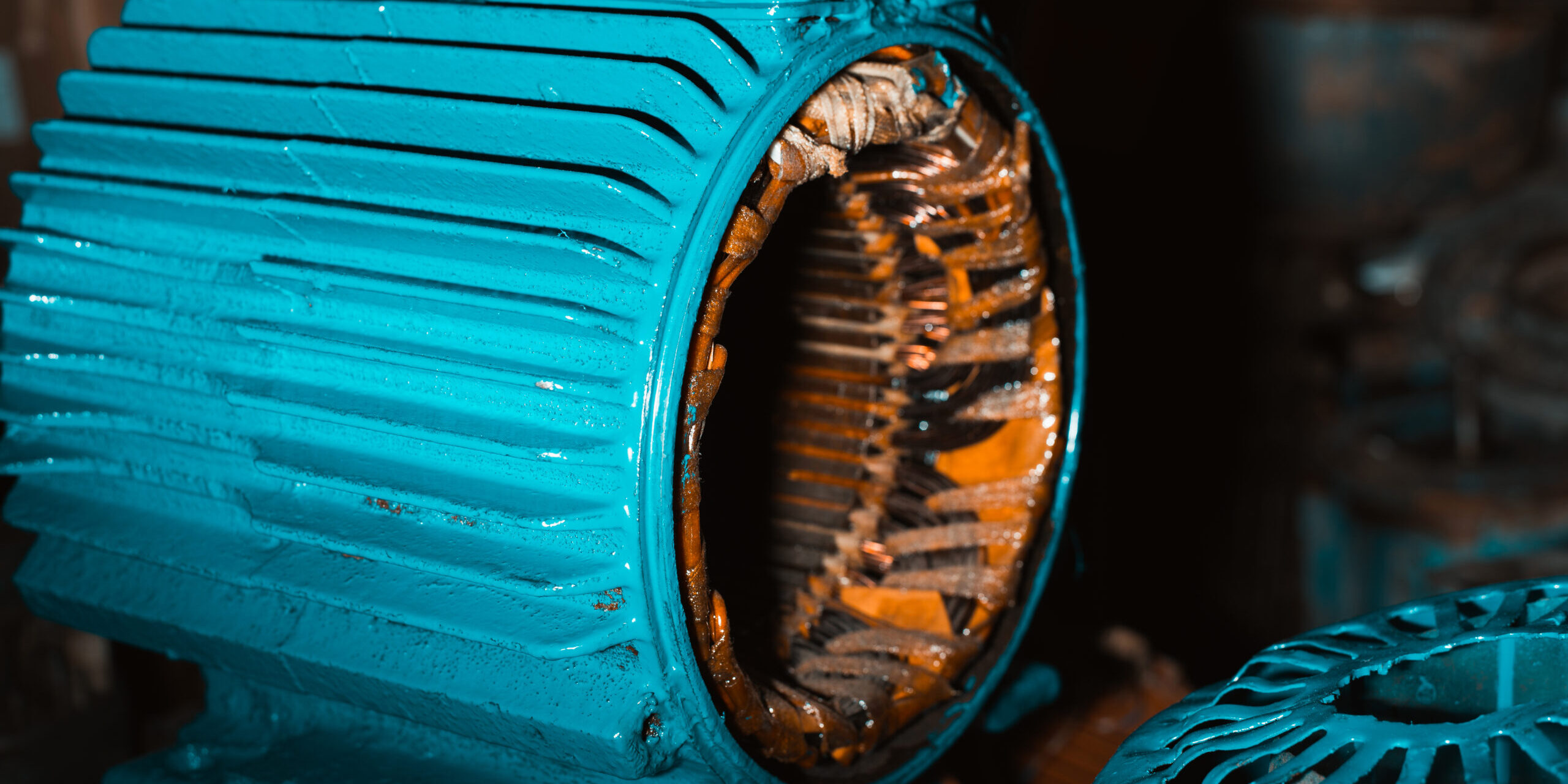
Industrial operations may need an expert when the time comes to rewind an electric motor. Although they keep engineers and maintenance crews on staff for operating machinery, when their electric motor’s coils give out, it takes a trained eye and hand to ensure the motor receives the professional repair it needs.
Rocky Mount Electric Motor provides that skillset where and when you need it. Our electric motor maintenance team has years of experience that you can trust. And, we like to share that experience with our customers so they know exactly what to expect when they ask us to rewind an electric motor.
The Process of Rewinding an Electric Motor
The steps to rewind an electric motor may seem simple, but we would like to remind our customers that these are powerful pieces of equipment we work with. The rewinding process should always be performed by a professional in a safe environment with the right tools. And, because of the large variety of electric motors brands and models that exist, this is not a comprehensive guide. Rather, we want to provide this as a general view into the process to help our customers better understand the work that Rocky Mount Electric Motor performs on your equipment. That being said, our steps for rewinding a motor include:
1. Removing Old Coils
We first need to replace the old coils within the motor. This requires the removal of the old coils. Using the proper tools and careful technique, we remove the insulation from the old coils. Here, we keep track of the number of coils within the motor, as we must install the exact same number when installing the new ones. Once the old, ruined coils are detached, we then remove the top of the motor containing these coils. Any remaining pieces or residue of burnt out coils are removed as necessary. Sometimes this requires heating the area until the varnish has melted and we can remove the remaining parts without difficulty.
2. Refinishing The Inside
The interior of the stator within the motor may have residue or rust built up that we need to remove before any replacement. This guarantees a better operation and lengthens the life of the motor. To do this, we polish the inside of the stator using the appropriate tools. Debris left during this process can cause issues when rewinding the motor. So, we provide a thorough polish to make the motor like-new. Once we finish polishing, we then apply anti-tracking paint for the electronics. Having removed the old coils, we then need to cut new insulation that will go inside the motor. We carefully cut insulation paper into uniform pieces, then push them into the clean slots of the stator.
3. Creating New Coils
To make the process of creating new coils simpler, we create a test coil from a piece of wire that we can use as a guide for the necessary length for creating the coils. We apply this size to our winding machine to ensure uniform coils. Once the first coil completes, we use this as a first sample to ensure our measurement is correct and it is the right size for the motor. Ensuring the proper size means the motor operates correctly, so we carefully check this on every rewinding project. Once we check and confirm we have the correct size, we then create the rest of the new coils, tying each individually.
4. Coil Assembly
We then insert each of the new coils into the motor, evenly spacing them apart from one another. After they are in place, we insulate the ends of the wires before connecting them at a later stage. We then wedge epoxy glass into each of the coil slots to keep everything firmly held in place. This completes the first stage of rewinding, with each separate coil group ready for phase installation!
5. Insulation of Phases
We then insulate each separate phase with insulation paper. Without it, any contact between them can lead to a shortage. So, we have to make sure that we carefully insulate each one properly. Once we install the insulation paper, we cut it to size to save on unnecessary space being taken up. Then, we tie together the wiring and insulation paper for a tight grip. After, the insulated wire ends from the previous step are trimmed to length for connecting to the start and end of the phases. They are then wound in the same way that the original wiring was. Wiring patterns are important to get right. This is part of the reason why it’s important to leave the overall process of rewinding a motor to a professional team like Rocky Mount Electric Motor.
The wiring then gets cut to size, readying the motor for the next stage.
6. Preparing Wire Ends
Once wound together, the wire ends are then soldered together. After soldering, we then insulate the ends as well, cutting the insulation to the proper length. Then the wire ends are laced to the rest of the system, keeping things clean and uncluttered. Then the start and end phase wires are pulled through the terminal box.
7. Careful Testing
With everything put together, we then put the wiring through some careful testing. We test wiring to make sure everything has been properly insulated. Then, we discharge anything that may have built up in them. Next, we check the system with measuring equipment to ensure there are no open circuits.
8. Finishing Touches
After testing, if the motor needs a new layer of paint at the end, we submerge the motor in varnish, then bake it at specific temperatures to set the varnish on the whole piece of equipment. We tie the thermistor to the windings that we pulled through the terminal box earlier. Once again, we make sure the placement on these wires goes in the same position as before. This protects against a variety of problems, like continuous overload or high ambient temperatures.
We then test wires once again to ensure the circuits are properly working. After this, we place new bearings on the rotor and place it back into place within the stator. We also re-insert the drive end cover. After everything has been put back into place, we then test the motor to make sure everything works as intended. Depending on what the motor attaches to, all other parts are then reattached, with smaller components replaced as necessary. This includes parts like pump ends, cooling fans, the terminal box cover, and more. Then, if needed, the whole system gets a new paint job to further protect it.
Trust Us to Rewind a Motor
Rocky Mount Electric Motor works on electric motors of all sizes for any industry. Our extensive knowledge of electric motors and their working components helps to diagnose and repair your motor, and this includes rewinds. Whether we have tested your motor and know that it needs a rewind, or you’re looking for professionals to have your rewinding done, our team can help. Reach out and give us a call today to learn more, or reach out on our contact page! We’ll happily help get your motor back in perfect shape.